

Cultivated meat is real meat grown from animal cells without farming or slaughter. It offers a way to enjoy the taste and nutrition of meat while addressing ethical concerns and reducing resource use. However, it’s not yet available in the UK due to regulatory delays. Joining a cultivated meat waitlist ensures you’re among the first to try it once approved.
Key Points:
- What It Is: Meat grown in labs from animal cells, not farms.
- Why It Matters: Uses up to 99% less land and emits 78–96% fewer greenhouse gases compared to beef farming.
- Current Status: Awaiting UK regulatory approval; first retail products expected by late 2027.
- Why Waitlists?: Early access, updates on regulatory progress, and priority pre-orders for limited initial batches.
Joining a waitlist is a simple step to stay informed and secure early access to this new food option.
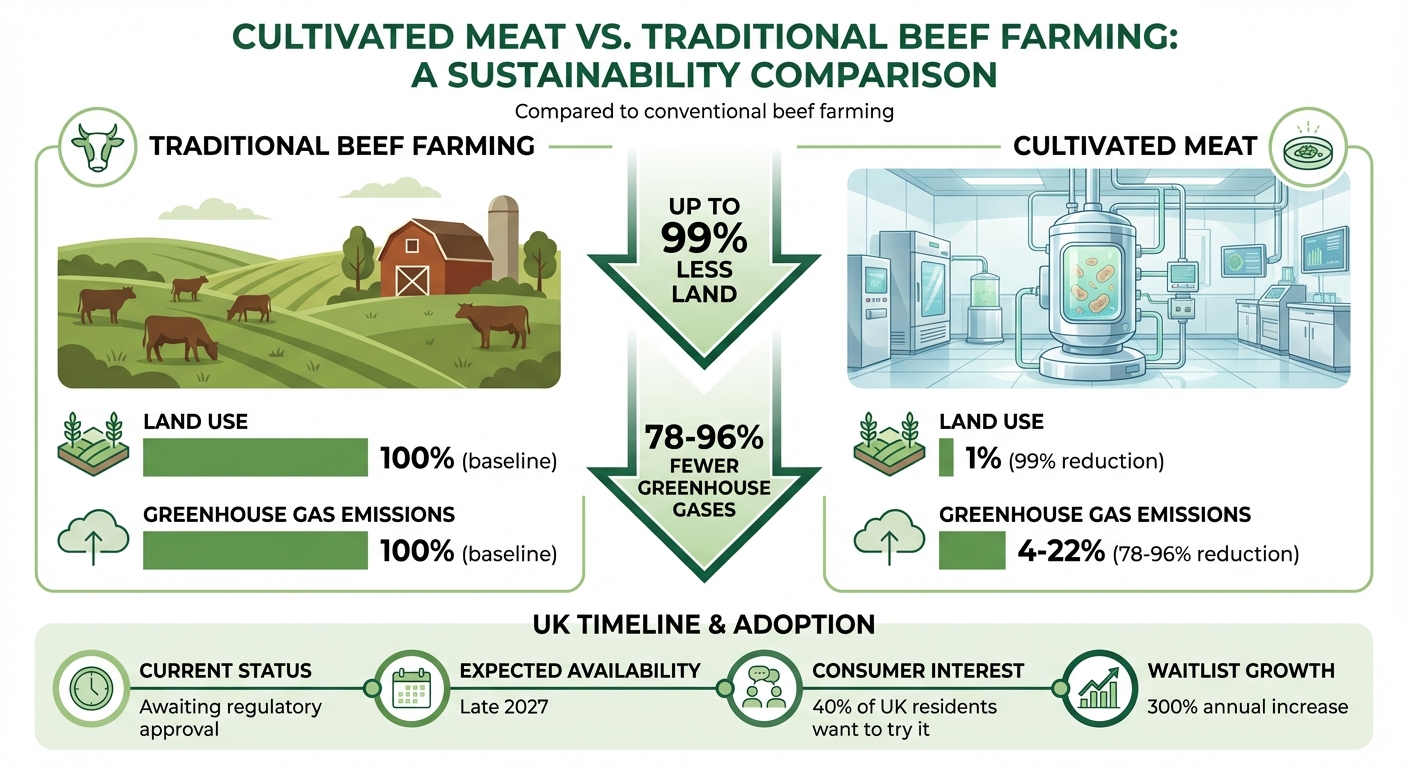
Cultivated Meat Environmental Impact vs Traditional Beef Farming
The Problem: Limited Access to Cultivated Meat
Availability Challenges in the UK
Cultivated meat isn't yet something you'll find in UK supermarkets, butcher shops, or restaurants. The main hurdle? Regulatory approval challenges and delays. The UK Government's current focus is on its long-term Animal Welfare Strategy, which prioritises improving traditional farming methods - like phasing out cages and farrowing crates - rather than speeding up approvals for new food technologies [1]. On top of that, Defra has expressed its intention to safeguard "sensitive sectors" in the UK food industry. This could mean limiting the entry of cultivated meat products from overseas if they’re seen as having an unfair competitive edge [1]. All of this explains why staying connected through a waitlist is vital to keep up with any progress.
Fast-Paced Development and Consumer Demand
Globally, cultivated meat research and development is moving quickly, but UK consumers are left waiting due to these regulatory roadblocks. With no clear timeline for when cultivated meat will hit the shelves, joining a waitlist is the best way to stay informed. It ensures you’re among the first to know when approvals are granted and products become available in the UK market.
sbb-itb-c323ed3
Benefits of Joining Cultivated Meat Waitlists
Early Access to Products
In the UK, where regulatory approvals for cultivated meat are still evolving, being on a waitlist offers a significant edge. Members get immediate notifications and priority pre-order access, allowing them to secure products 3–6 months ahead of the general retail release. This is particularly important when initial production is limited. While waitlist members can enjoy sampling cultivated meat as soon as it becomes available, regular customers may face long queues or stock shortages once these products hit the shelves [2].
| Feature | Waitlist Members | Standard Retail Consumers |
|---|---|---|
| Notification Timing | Immediate alert upon regulatory approval | General news or in-store availability |
| Product Access | Priority pre-order shortly after approval | Potential post-launch queues and stock shortages |
| Information | Early access to science and product previews | Details available only at the point of sale |
Updates and Product Previews
Waitlist members are kept in the loop with regular updates on regulatory progress and scientific advancements. They also get early previews of new products, including details like pricing in pounds sterling, nutritional information, and sustainability metrics. These previews highlight innovations in categories like cultivated chicken, beef, and seafood before they reach the broader public. By offering a behind-the-scenes look at the production process, these updates help clarify the benefits of cultivated meat compared to traditional meat. Staying informed in this way also offers members the chance to engage with others who share a vision for the future of food [2].
Joining a Community of Early Adopters
Joining a cultivated meat waitlist is more than just gaining early access - it's about being part of a movement towards ethical, sustainable, and science-driven food solutions. It connects like-minded individuals in the UK who are eager to influence the future of food systems. Early adopters play a crucial role in making this technology more mainstream, helping to foster its acceptance as it moves closer to commercial availability. As David Bell, Founder of Cultigen Group, puts it:
"It's exciting to envisage a future in which anyone can eat meat, whilst maintaining the morals around animal cruelty which first shifted my focus all those years ago."
How Cultivated Meat Shop Supports Waitlist Members
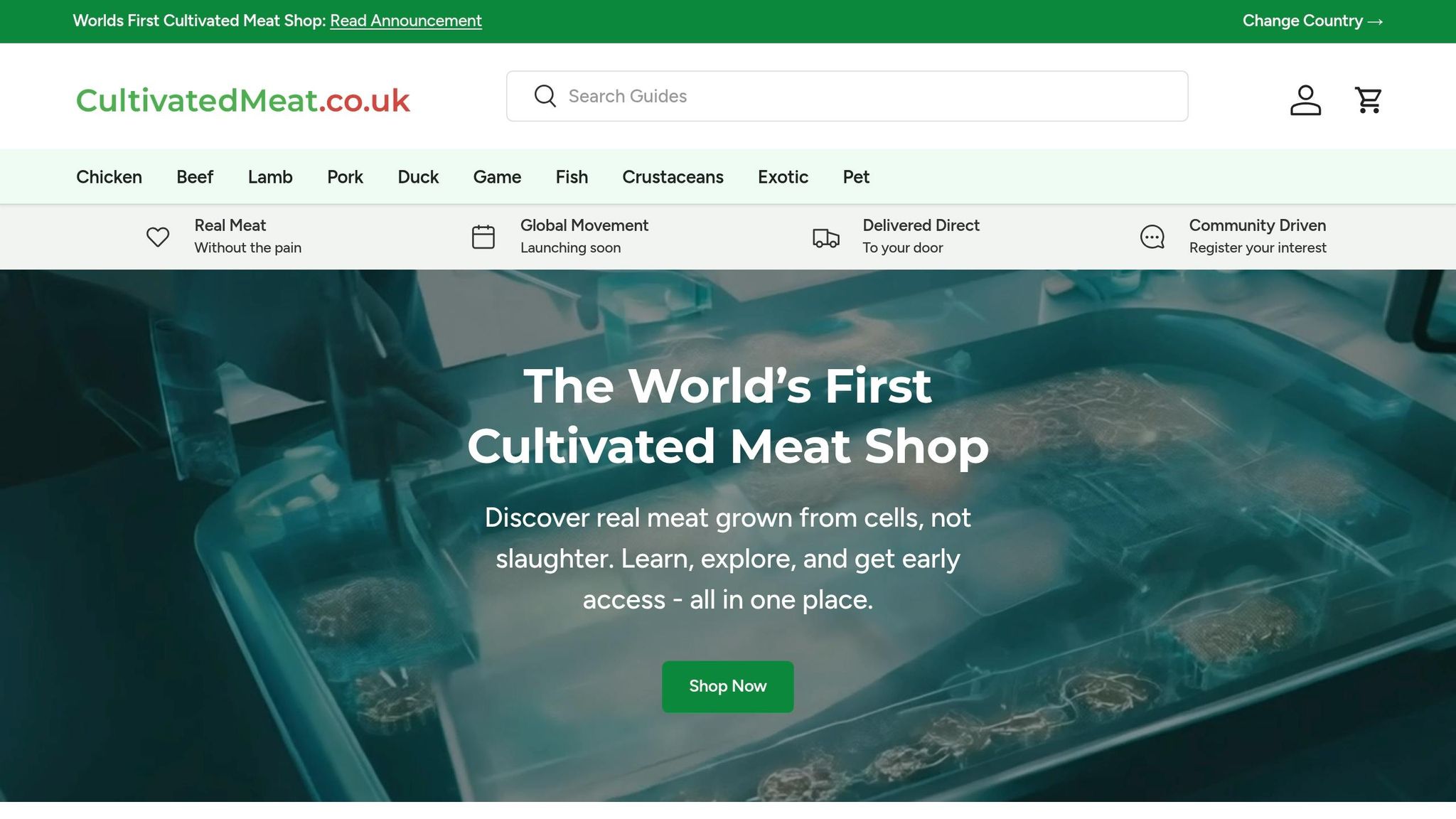
A Consumer-First Platform
Cultivated Meat Shop prioritises its waitlist members by offering tools that simplify and enhance the experience. The platform consolidates multiple waitlists into one easy-to-navigate dashboard. UK consumers can sign up with a single click and access curated lists of upcoming releases, complete with transparent timelines aligned with regulatory approvals. The first retail availability is expected by late 2027 [4][10]. Members can track their progress through notifications and postcode-specific eligibility checkers [5]. Additionally, the platform provides an impartial overview of waitlist perks, such as priority access tiers and exclusive sample opportunities [5].
Educational Content and Clear Information
To demystify cultivated meat for UK audiences, Cultivated Meat Shop offers a range of educational resources. Their "Cultivated Meat 101" guide includes taste comparison charts, with descriptions such as "structurally identical to rump steak" [7]. Other articles dive into health benefits, such as lower antibiotic use and nutritional profiles that match traditional meat [6]. Sustainability content highlights impressive advantages, including a 90% reduction in greenhouse gas emissions per kilogram compared to conventional farming methods [6].
Members also gain access to myth-busting FAQs, covering topics like safety (aligned with FSA standards) and practical considerations, such as a shelf-life of 5–7 days when stored at 4°C [7]. Expert interviews with UK food scientists, including insights from University of Bath researchers on the scalability of cell cultivation, further build trust and understanding [8].
Preparing for the Future of Meat
The platform equips waitlist members with tools to prepare for the arrival of cultivated meat. Personalised readiness checklists offer practical storage advice for home fridges (0–5°C) and preview recipes tailored to British favourites - like a shepherd's pie made with cell-grown lamb - helping members seamlessly incorporate cultivated meat into their meals [9].
Cultivated Meat Shop also highlights growing consumer interest, with 40% of UK residents expressing a desire to try cultivated meat and waitlists expanding by 300% annually [10].
"We're building the foundation today for tomorrow's protein revolution." [3]
These features ensure waitlist members are informed, prepared, and ready to embrace the future of cultivated meat.
Cultivated Meat Is FINALLY Coming To The UK!!!
Conclusion
Joining a Cultivated Meat waitlist is a practical way to address the limited availability while awaiting UK regulatory approval. This follows significant global industry momentum as production scales. By signing up, you gain early access to future products, stay updated with exclusive news and previews, and become part of a community shaping the future of ethical and sustainable meat options. It’s a simple yet impactful step towards experiencing this innovative food alternative.
The Cultivated Meat Shop ensures the process is hassle-free, offering consolidated updates and tools to keep you informed every step of the way.
FAQs
Is cultivated meat safe to eat?
Yes, cultivated meat is safe to eat. It’s grown in sterile, carefully controlled environments and goes through rigorous safety testing before reaching consumers. These precautions ensure it adheres to strict safety standards, making it a dependable choice for consumption.
Will cultivated meat be affordable in the UK at launch?
As cultivated meat production evolves, it's anticipated to become more budget-friendly for UK consumers. With production costs steadily declining, experts predict that by approximately 2035, prices could align with those of traditional meat. This shift will likely be driven by advancements in technology and the benefits of scaling up production processes.
What happens to my data when I join a waitlist?
When you sign up for a cultivated meat waitlist, your information is used to grant early access, share updates, and provide relevant product details. The platform handles your data according to its privacy policies, ensuring effective communication and a seamless experience.


