

Automation is driving down the cost of cultivated meat, bringing it closer to everyday supermarket shelves in the UK. Here's how companies are cutting expenses and preparing for large-scale production:
- AI-powered bioreactors ensure precise conditions, reducing waste and labour.
- Automated systems streamline production steps like media preparation and sanitation.
- Food-grade equipment replaces costly pharma-grade machinery, slashing costs.
- Innovative sourcing of growth factors, like using barley plants, further reduces expenses.
Key players like Mosa Meat, Upside Foods, and Meatly are leading the charge, with Mosa cutting production costs by 99.999% since its first €250,000 burger in 2013. Meatly’s new 20,000-litre facility in London, the largest in Europe, is set to produce affordable cultivated meat by 2027. The UK market is poised for growth, with pet food serving as an entry point before human consumption products gain regulatory approval.
Automation is making cultivated meat more accessible, with benefits for consumers and a potential £2.1 billion contribution to the UK economy by 2030.
Cost drivers of cultivated meat production
sbb-itb-c323ed3
How Automation Lowers Costs in Cultivated Meat Production
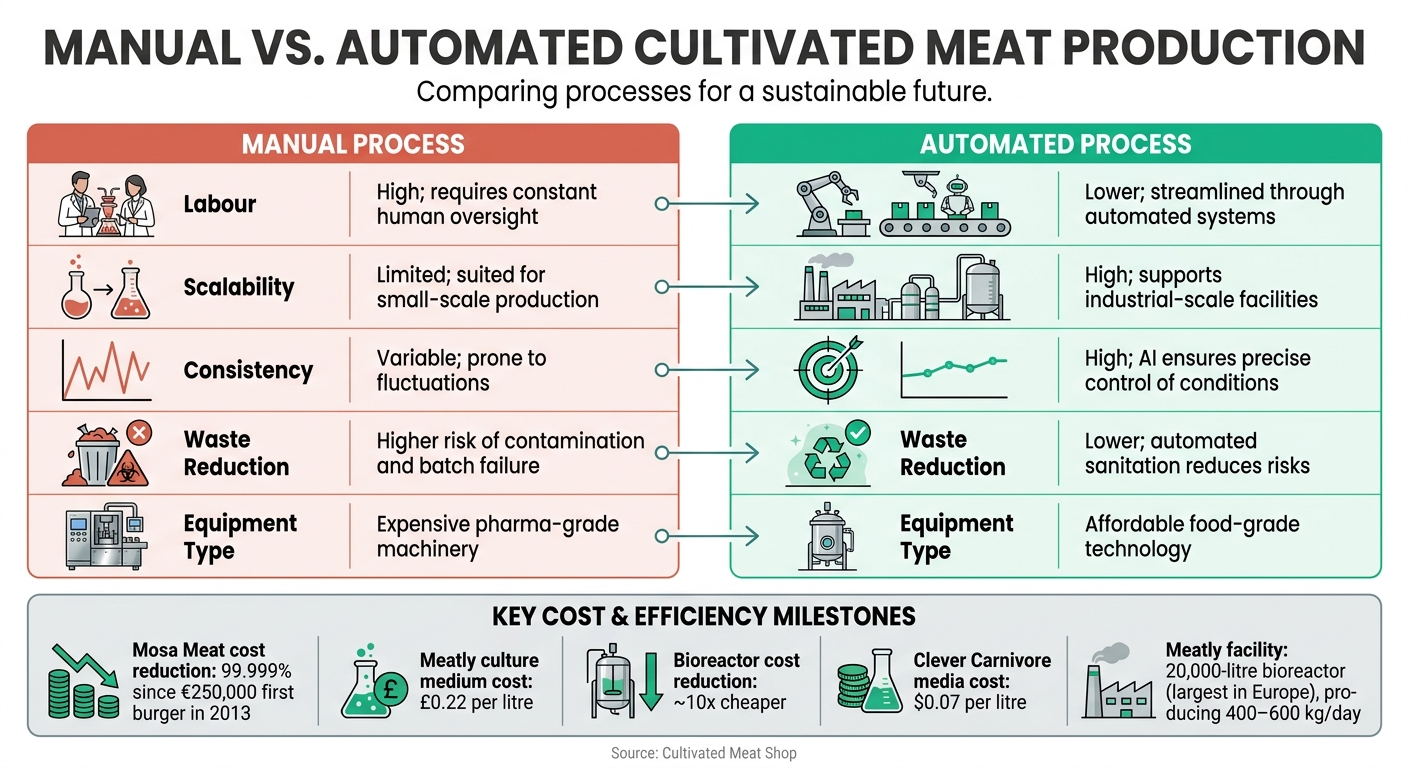
Manual vs Automated Cultivated Meat Production: Cost & Efficiency Breakdown
Producing cultivated meat has traditionally been an expensive endeavour, with costs driven by factors like cell culture media, growth factors, bioreactors, labour, and energy demands. These expenses have historically made it difficult for cultivated meat to compete with conventional meat on supermarket shelves.
But things are changing. Costs are coming down, and automation is playing a big role in this shift.
Key Automation Tools Used in Production
Modern cultivated meat facilities rely on cutting-edge technologies to streamline operations and improve efficiency. For example, AI-powered bioreactors maintain ideal growing conditions around the clock by continuously monitoring factors like temperature (usually set at 37°C), pH levels, and gas mixtures (including CO₂ and O₂). This eliminates the need for constant human intervention.
Additionally, automated workflow software handles the sequencing of production steps, from preparing cell culture media to harvesting the final product. Automated cleaning and sterilisation systems further enhance efficiency by running continuous sanitation cycles on an industrial scale [3].
Material sourcing is also evolving. Iceland-based Orf Genetics, for instance, supplies growth factors to over 150 cultivated meat companies. They use barley plants as natural bioreactors to produce proteins more cost-effectively, powered by Iceland's geothermal energy [1].
"Being able to cultivate barley outside, rather than always needing to build greenhouses, is a big cost-saver." - Berglind Rán Ólafsdóttir, CEO, Orf Genetics [1]
These technologies not only boost production efficiency but also significantly cut costs.
Cost Benefits of Automation
One of the biggest advantages of automation is the reduction in staffing requirements. Automated systems take over repetitive and labour-intensive tasks, cutting down on the need for large workforces.
Another major shift is the move from expensive pharma-grade machinery to more affordable food-grade equipment. This transition lowers both the upfront costs of equipment and the ongoing expenses of running it [1].
"Using food-grade tech, rather than pharma-grade, also significantly reduces costs." - Berglind Rán Ólafsdóttir, CEO, Orf Genetics [1]
Scaling up production is another critical factor. In May 2026, UK-based startup Meatly raised £10.4 million to build a 20,000-litre bioreactor facility - the largest in Europe. With the ability to produce 400 to 600 kg of cultivated meat daily, the cost per kilogram drops significantly compared to smaller-scale operations [2].
By integrating automation across every stage of production, the industry is making cultivated meat more affordable and accessible, paving the way for broader adoption.
Manual vs Automated Processes: A Comparison
To understand the impact of automation, let’s compare manual and automated processes:
| Process Element | Manual Process | Automated Process |
|---|---|---|
| Labour | High; requires constant human oversight | Lower; streamlined through automated systems |
| Scalability | Limited; suited for small-scale production | High; supports industrial-scale facilities |
| Consistency | Variable; prone to fluctuations | High; AI ensures precise control of conditions |
| Waste Reduction | Higher risk of contamination and batch failure | Lower; automated sanitation reduces risks |
| Equipment Type | Expensive pharma-grade machinery | Affordable food-grade technology |
Mark Post, Chief Scientific Officer at Mosa Meat, has highlighted how the cost of cell culture media has already dropped by hundreds of times since the industry’s early days. However, further cost reductions are still needed, and automation remains central to achieving them [1].
Brands Using Automation to Lower Costs
Several companies are demonstrating how automation can significantly reduce costs while scaling up production. Here's how some of the leading names in cultivated meat are making it happen.
Upside Foods
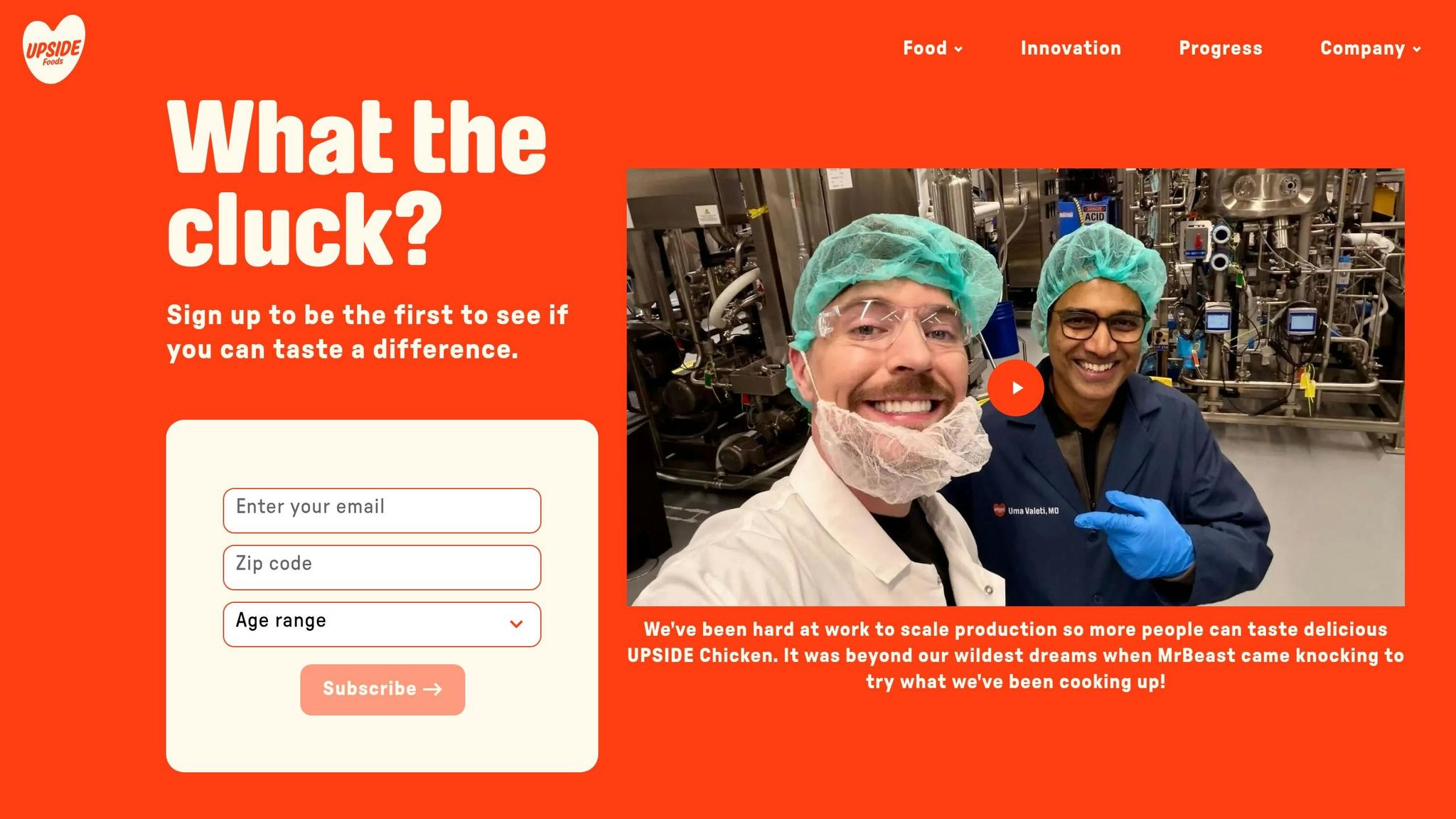
Upside Foods has secured $608 million in funding since 2015. Its massive "Rubicon" facility spans 187,000 square feet (around 17,400 m²) and is designed to house cultivators with capacities of up to 100,000 litres. The goal? To produce over 30 million pounds (roughly 13.6 million kg) of cultivated meat annually [5][6].
The company has shifted its focus to suspension production and ground meat formats like nuggets and sausages. This approach simplifies large-scale production and cuts costs. Upside Foods also uses 2,000-litre cultivators to simulate larger-scale conditions, testing variables such as osmotic pressure and shear force, while selecting cell lines that require fewer growth factors [5].
"The design basis for Rubicon when you think about the scale which we're talking about, the unit economics look attractive." - Amy Chen, COO, UPSIDE Foods [5]
In collaboration with Jacobs, a global engineering firm, Upside Foods has brought industrial-scale precision to cultivated meat production, historically a more experimental process. These efforts are directly lowering the cost per kilogram at commercial volumes [6].
Eat Just / GOOD Meat
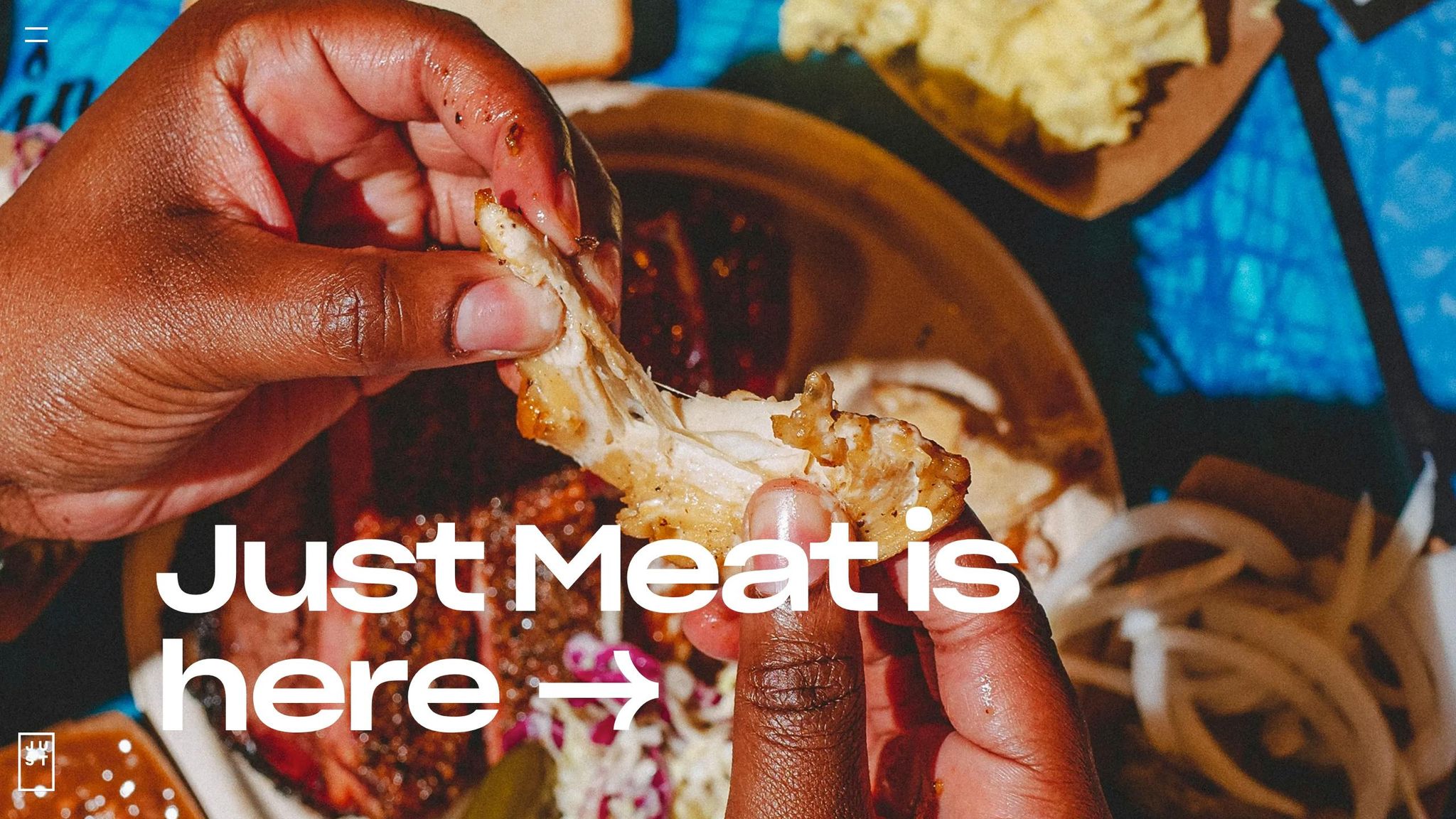
GOOD Meat, a division of Eat Just, made history as the first to gain regulatory approval for cultivated chicken. Its automation efforts focus on scaling bioprocessing infrastructure to cut costs at commercial production levels. Plans for a large-scale production plant in the United States are in the works, pending additional funding [5].
Like Upside Foods, GOOD Meat relies on suspension-based production, a method designed to achieve cost-efficient output as production scales. Each step of its bioprocessing pipeline is optimised to reduce unit costs as volumes grow.
Mosa Meat
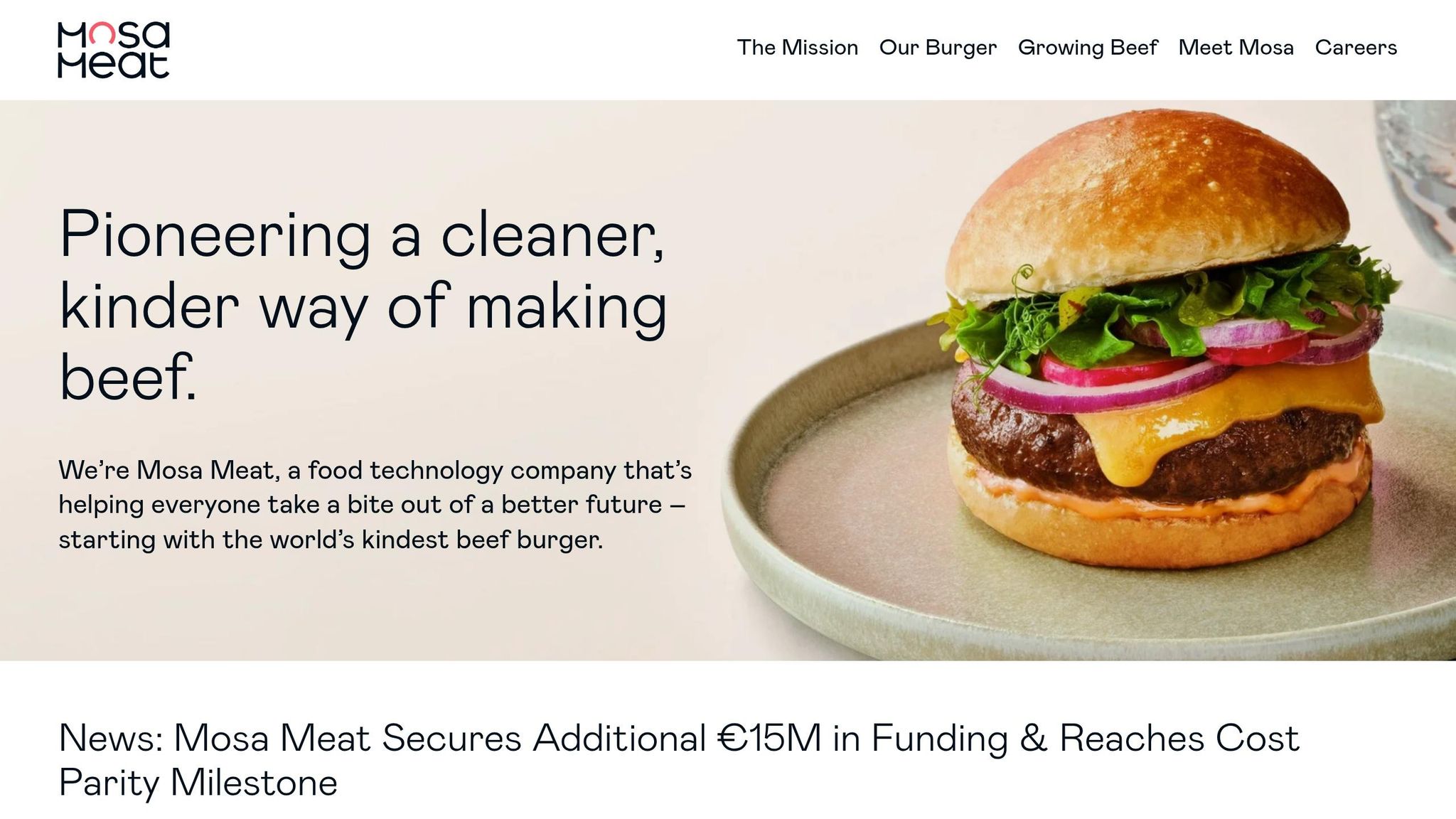
Mosa Meat, the Dutch company that introduced the world to the first cultivated beef burger in 2013, has prioritised serum-free media development to lower costs. By eliminating animal-derived components like foetal bovine serum (FBS), the company tackles both expense and sustainability issues.
Additionally, Mosa Meat has invested in bioprocess automation at its pilot facilities, using precise systems to control cell growth conditions. These combined efforts are helping to bring the company closer to commercial viability [1].
Aleph Farms
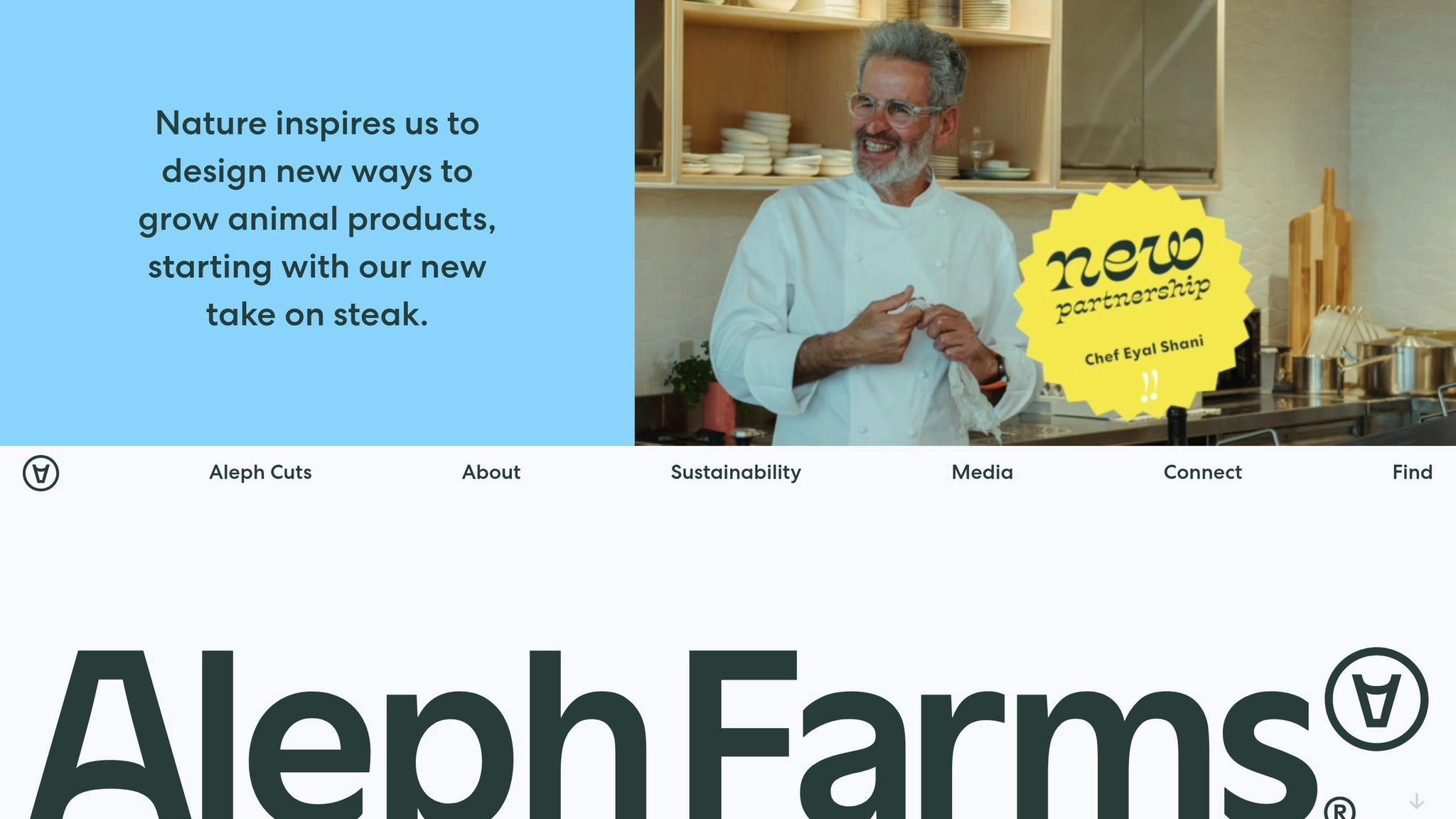
Israel-based Aleph Farms focuses on producing structured cultivated meat - products that mimic the texture and appearance of whole cuts. The company leverages AI-driven tools to optimise growth conditions and has partnered with industrial automation firms to integrate advanced controls and automated monitoring. These measures reduce manual labour while improving consistency, helping to offset the complexities of producing structured cuts.
Early-Stage Brands to Watch
Clever Carnivore, an early-stage startup, has achieved a pilot-scale culture media cost of just $0.07 per litre, compared to €0.20 and £0.22 per litre from competitors [4].
"Our expertise in media optimisation allows us to replace expensive components like BSA and FBS with carefully chosen alternatives, and ensure that we're using only the absolutely essential components, maximising growth and minimising cost and waste." - Virginia Rangos, CEO, Clever Carnivore [4]
The Chicago-based company produces its culture media in-house, using raw ingredients like vitamins, salts, and amino acids instead of costly pre-made products. Clever Carnivore also uses custom-built bioreactors, keeping the cost of its demonstration plant under $4.5 million. Having raised $9.1 million so far, the company plans to launch processed pork products such as bratwursts and breakfast sausages [4].
"We've had more flexibility to allow science to drive strategy because pioneers have already proven that cultivated meat can be sold and that consumers will buy it." - Virginia Rangos, CEO, Clever Carnivore [4]
These examples highlight how automation and lean strategies are driving meaningful cost reductions, paving the way for more affordable cultivated meat options, including in markets like the UK.
What This Means for UK Consumers: Prices and Availability
Cost Reduction Trends Across the Industry
The cultivated meat industry is undergoing a transformation. Companies are shifting from costly pharmaceutical-grade production methods to food-grade systems, which significantly cut both capital and operational costs. At the same time, manual lab processes are being replaced by automated, software-driven systems. These changes are not only reducing labour expenses but also improving consistency when scaling up production.
One standout example is the dramatic reduction in bioreactor costs - now about ten times cheaper thanks to technical advancements [7][8]. Additionally, the cost of culture media has plummeted. Icelandic company Orf Genetics has played a key role here, using bioengineered barley to produce essential growth factors. Their work supports around 150 companies, including major players like Mosa Meat and Vow [1]. These advancements are expected to lead to noticeable savings for shoppers in the long term.
What It Could Mean for UK Shoppers
As production costs continue to drop, UK consumers could see more affordable prices and greater availability of cultivated meat. Meatly’s new 20,000-litre bioreactor facility in London, the largest in Europe, is a major step forward. This positions the UK as a leader in the cultivated meat space, with commercial products anticipated by 2027 [7][8]. Once regulatory approvals are secured, these cost reductions could make cultivated meat a regular feature on supermarket shelves.
"The market opportunity for sustainable and high-quality protein is enormous, but success in this category ultimately comes down to one thing: bringing down the cost of production." - Jim Mellon, Chairman and Founding Investor, Meatly [8]
Before cultivated meat can be sold for human consumption in the UK, it needs approval from the Food Standards Agency (FSA). However, experts predict that by 2030, cultivated meat could achieve price parity with conventional meat. This emerging sector could also contribute £2.1 billion to the UK economy by that time [9]. In the meantime, Meatly is taking a strategic approach by entering the pet food market first, which has fewer regulatory hurdles. This move allows them to refine large-scale production before expanding into human food [3][8]. These steps are laying the groundwork for a more sustainable and cost-effective future in meat production, with clear benefits for UK consumers.
"Rethinking how we produce protein is an essential part of tackling the climate crisis. We've invested in Meatly because they are showing it's possible to produce real meat cost-competitively." - Connor Duffy, Investment Manager, Clean Growth Fund [7]
How Cultivated Meat Shop Keeps Consumers Informed
Cultivated Meat Shop is a platform dedicated to keeping UK shoppers up to date with the latest developments in the cultivated meat industry. It breaks down complex topics - like regulatory updates and production advancements - into easy-to-understand content. For those eager to try cultivated meat, the platform also offers a waitlist, ensuring consumers are among the first to know when products hit UK shelves.
Conclusion: Where Automation Takes Cultivated Meat Next
Automation is turning Cultivated Meat from a costly scientific experiment into a product that could soon rival traditional meat in UK shops. Back in 2013, Mosa Meat's first burger came with a staggering €250,000 price tag. Fast forward to today, and the company has slashed costs by an incredible 99.999%, signalling a shift towards market readiness. Meanwhile, Meatly has made impressive strides, cutting the price of culture medium to just £0.22 per litre and reducing bioreactor costs by around tenfold [7][10]. These developments are paving the way for more affordable options for UK consumers.
The industry is clearly moving away from pharmaceutical-grade methods, which are expensive and complex, and embracing streamlined, automated food-grade production systems. As Mosa Meat CEO Maarten Bosch aptly stated:
"Today, through fundamental scientific breakthroughs and scaling efficiencies, we are producing burgers at a price point ready for restaurant menus." [10]
A major milestone for the UK is Meatly's 20,000-litre bioreactor facility in London - the largest in Europe - which is gearing up for commercial product launches by 2027 [7]. Interestingly, the pet food market is already acting as a testing ground, allowing companies to refine large-scale production techniques before transitioning to human food. With automation driving efficiency, the once far-off dream of affordable Cultivated Meat in everyday supermarkets is quickly becoming attainable.
Cultivated Meat Shop is keeping a close eye on these developments - from bioreactor innovations to FSA regulatory updates - breaking down the complexities into simple, actionable insights for consumers. Join the waitlist at Cultivated Meat Shop to be among the first to experience Cultivated Meat on UK shelves.
FAQs
Will Cultivated Meat be priced like conventional meat in the UK?
Cultivated meat is expected to match the price of traditional meat in the UK by approximately 2030. This shift is being driven by technological progress and declining production costs, which are steadily making cultivated meat more accessible and affordable.
What does automation do in a Cultivated Meat factory?
Automation in a cultivated meat factory fine-tunes critical factors such as mixing, pH, dissolved oxygen, and nutrient levels using real-time monitoring and feedback systems. This approach ensures steady cell growth while protecting the fragile animal cells from harm. Moreover, technologies like process analytical technology (PAT) and machine learning play a key role by dynamically adjusting media flow and agitation speeds. These adjustments not only create better growth conditions but also help cut production costs.
When will Cultivated Meat be available to buy in the UK?
Cultivated meat is projected to hit the shelves in the UK by 2027. By then, regulatory approvals and early trials in foodservice settings are expected to be completed, giving consumers the chance to explore this new food alternative.


