

Consumers want honesty from brands, especially when it comes to food. In the UK, people expect clear information about what they eat, how it’s made, and why certain methods are used. This is especially true for new food technologies like Cultivated Meat, which is real meat grown from animal cells without raising or slaughtering animals.
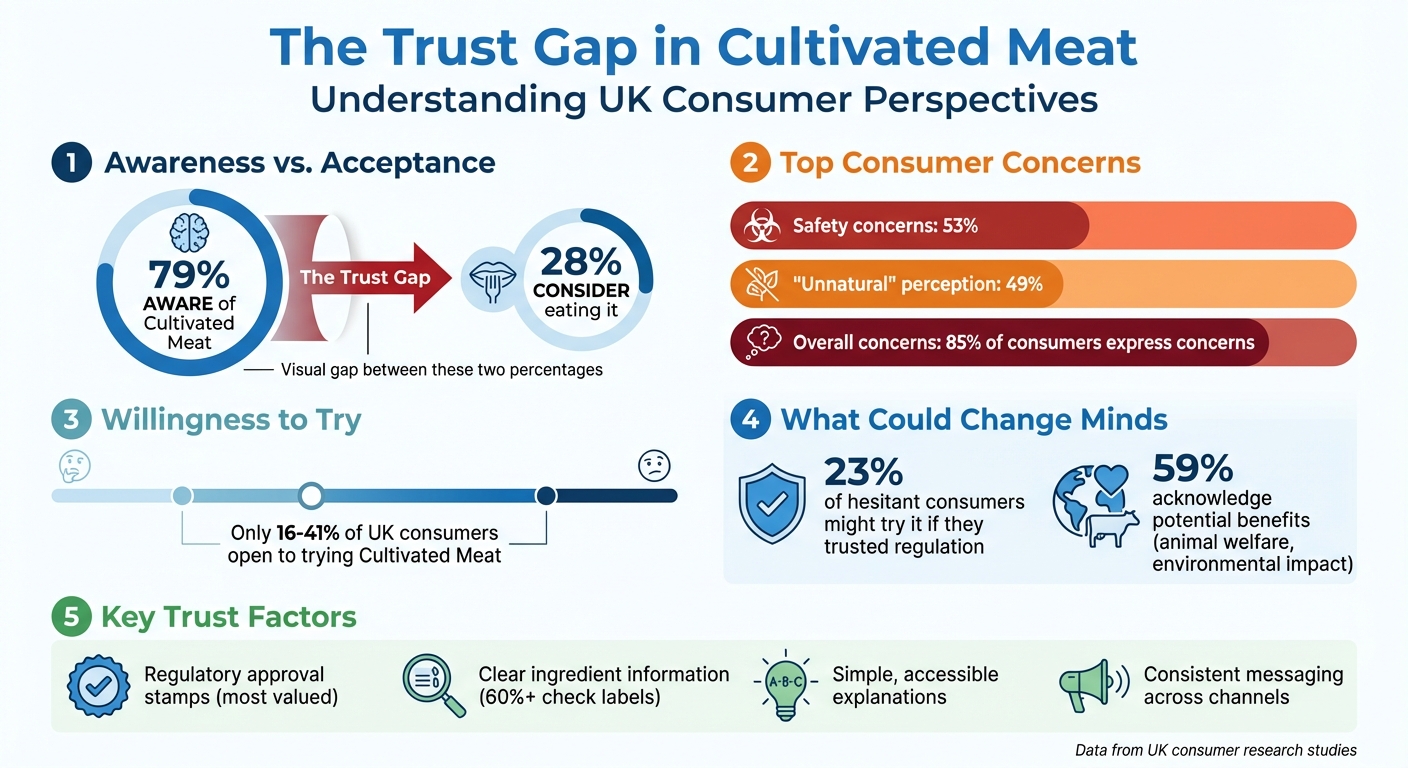
While 79% of UK consumers are aware of Cultivated Meat, only 28% would consider eating it. Concerns about safety (53%) and its "unnatural" nature (49%) dominate, despite its potential benefits like improving animal welfare and reducing environmental harm. Transparency is the key to bridging this trust gap.
Here’s what brands need to focus on:
- Clear labelling: Highlight regulatory approvals, ingredients, and allergen information.
- Simple explanations: Use accessible language to describe how Cultivated Meat is made.
- Consistent messaging: Avoid mixed messages across packaging, websites, and marketing.
- Educational resources: Platforms like Cultivated Meat Shop help consumers understand the process and benefits.
Honest communication empowers consumers to make informed decisions, turning scepticism into trust.
UK Consumer Attitudes Toward Cultivated Meat: Awareness, Acceptance, and Concerns
Consumer Concerns About Cultivated Meat
Safety, Ethics, and Naturalness Concerns
In the UK, around 85% of consumers express concerns about Cultivated Meat, with safety and the perception of it being "unnatural" often topping the list [1]. These worries largely stem from uncertainties about how it’s produced and ethical dilemmas tied to growing meat from cells.
The idea of unnaturalness can spark an instinctive aversion. Research highlights how feelings of disgust often act as a protective response against perceived risks.
"Perceived naturalness of cultured meat affects acceptance both directly and indirectly, via disgust evoked."
– Michael Siegrist, Professor, ETH Zurich [7]
Another source of uncertainty lies in whether Cultivated Meat might trigger the same allergens as traditional meat [1]. Additionally, growing scepticism about production additives has over 60% of global consumers closely inspecting ingredient labels [5]. Despite these concerns, only 16–41% of UK consumers say they’re open to trying Cultivated Meat - a number that hasn’t shifted much in recent years [1].
These hesitations highlight a broader challenge: bridging the trust gap in new food innovations.
The Trust Gap in New Food Categories
There’s a clear divide between awareness and acceptance when it comes to Cultivated Meat. Much of this trust gap stems from consumers feeling disconnected from the food system. Confidence in regulatory oversight plays a key role here; 23% of hesitant UK consumers say they might be persuaded to try Cultivated Meat if they trusted it was properly regulated [6]. However, many remain unaware that Cultivated Meat must undergo strict FSA safety evaluations before it can appear on UK shelves [2].
While 59% of consumers acknowledge potential benefits - such as improved animal welfare and reduced environmental impact - these positives are often overshadowed by lingering safety concerns [1][4]. Transparent communication about how Cultivated Meat is made and the safety measures in place could help close this trust gap. As discussed earlier, honesty in branding and empowering consumers with clear, accessible information are crucial steps toward building confidence and lasting trust in this emerging food category.
How Transparency Builds Consumer Trust
Transparency and Safety Perception
When it comes to Cultivated Meat, regulatory approval plays a crucial role in building consumer confidence. Official validation from organisations like the Food Standards Agency (FSA) holds much more weight for consumers than labels such as "slaughter-free" or "non-GMO" [1]. In fact, trust in regulation is one of the strongest indicators of whether someone will consider trying Cultivated Meat [1].
In October 2024, the FSA announced a £1.6 million funding boost from the Engineering Biology Sandbox Fund. This funding will support a programme launching in March 2025, aimed at ensuring Cultivated Meat products meet safety standards before hitting UK shelves [1]. By being open about this rigorous regulatory process, the FSA addresses the trust gap, showing that independent experts are thoroughly evaluating these products.
Transparency doesn’t stop at regulatory approval. Clearly explaining the purpose and origin of every ingredient helps combat concerns about excessive processing [5]. Providing this level of detail builds on safety validation, giving consumers the knowledge they need to feel reassured.
Giving Consumers Control Through Information
The modern food system often leaves people feeling like they have little control over what they consume. Honest and accessible information can change that. When consumers understand what’s in their food and why, they feel more confident making choices - especially with something as new as Cultivated Meat [3][5].
This clarity is essential, considering that 82% of global consumers want labels on health and wellness products to be simpler and easier to understand [5]. Transparency isn’t just about listing ingredients; it’s about presenting information in a way that’s easy to grasp. Platforms like Cultivated Meat Shop are stepping up by offering educational content that breaks down production processes, explains safety protocols, and answers common questions. All of this is done in straightforward language, empowering consumers to make informed decisions.
However, not all tools for transparency resonate equally. Many consumers find QR codes and complex tracking systems inconvenient or untrustworthy [5]. Instead, simple on-pack labelling, combined with accessible online resources, tends to be more effective in building confidence.
Consistency and Ethical Values
Trust doesn’t just hinge on safety and clear information - it also depends on how consistently brands communicate their ethical values. For Cultivated Meat, attributes like sustainability and reduced environmental impact are "credence attributes." These are qualities consumers can’t verify through taste or appearance; they rely on the brand’s word [9]. This makes consistency in messaging absolutely vital. By openly addressing ethical concerns, such as reducing environmental harm, brands can connect with consumers who prioritise sustainability and animal welfare.
The challenge, however, lies in proving authenticity. Inconsistent or vague messaging can easily lead to scepticism, with consumers perceiving a brand as profit-driven rather than purpose-driven. As highlighted by the Journal of Business Economics:
"What consumers know about a company can influence their reactions to the company's products"
– Journal of Business Economics [8]
Brands that consistently communicate their ethical commitments - across packaging, websites, and social media - can build trustworthiness that extends to unobservable qualities like safety and quality [8]. Growing consumer recognition of Cultivated Meat’s ethical and environmental benefits [1] presents an opportunity. Transparent and consistent messaging about these values can help turn awareness into acceptance, laying the groundwork for practical strategies that strengthen transparent branding even further.
Practical Strategies for Transparent Branding
Clear and Honest Labelling
Transparency starts with the packaging. Using descriptive terms like "cultivated chicken" or "cultivated beef" ensures consumers know exactly what they’re purchasing. Labels featuring "cell-cultivated" or "cell-cultured" help differentiate these products from traditional farm-raised or grass-fed meat [1][10].
It’s essential for labels to clearly state that the product is made from real animal cells and provide allergen information. This is particularly important given that around 2.3% of the U.S. population is allergic to seafood [10].
Prominently displaying regulatory approval stamps, such as those from the Food Standards Agency (FSA), builds trust. Consumers often value these official endorsements more than claims like "slaughter-free" or "carbon-neutral" [1]. In February 2025, the FSA introduced a £1.6 million Cell-Cultivated Products Sandbox Programme to establish clear safety and labelling standards in Great Britain [2]. Highlighting this oversight reassures consumers about product safety and quality.
Avoid relying solely on QR codes to convey key details. While they may seem convenient, many consumers view them as obstacles or a way to hide information [5]. Important details - like ingredients and production methods - should be directly visible on the packaging, as over 60% of global consumers check labels for such information [5].
Beyond the packaging, clear communication about how Cultivated Meat is produced helps eliminate confusion.
Explaining the Production Process in Plain Language
The word "lab" can create a perception of unnaturalness or reduced safety, even though Cultivated Meat is produced in food-grade facilities, not laboratories [1][11]. Using relatable analogies, such as describing production facilities as "brewery-like", makes the process feel more familiar and approachable [12].
Simple explanations work best. Break the production process into easy-to-follow steps: isolating cells from animals, growing them in a nutrient-rich environment, and then harvesting them for food [2]. This step-by-step approach highlights how the process differs from traditional farming without overwhelming consumers with technical language.
Context is equally important. Framing Cultivated Meat as the next step in the evolution of food production - similar to how agriculture replaced hunting - helps people see it as progress, not something alien [11]. Emphasising that the biological origin is the same as conventional meat, just grown differently, can make the concept easier to accept.
Consumers also want to know the "why" behind each ingredient. Today’s buyers don’t just care about what’s in their food; they want to understand the purpose of each component [5]. Lauren May from the Future of Food Institute explains:
"There's this belief that if you don't recognise all the ingredients then they must be unnatural or unhealthy"
– Lauren May, Researcher, Future of Food Institute [5]
Addressing these concerns directly helps dispel misconceptions about processed foods. By clearly explaining the production process and ingredient choices, brands can build trust and confidence in the safety of Cultivated Meat.
Using Educational Platforms Like Cultivated Meat Shop
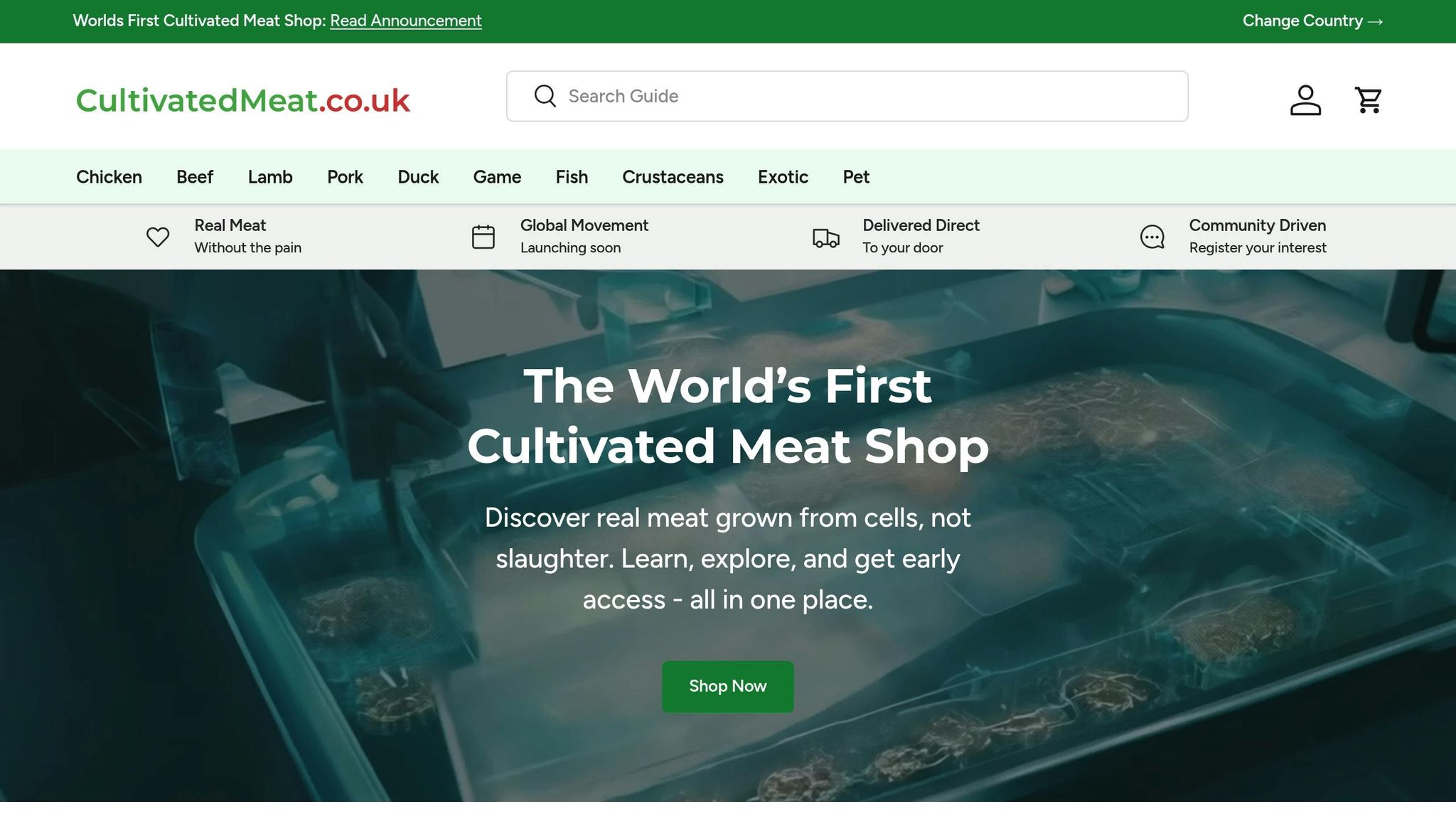
To complement clear labelling and simple production explanations, well-designed educational platforms can provide in-depth information. With 85% of consumers expressing concerns about Cultivated Meat - mainly around safety, naturalness, and its effects on traditional farming - resources that offer clear, science-backed content are crucial [1]. Platforms like Cultivated Meat Shop serve this purpose, presenting accessible information about production methods, safety measures, and nutritional benefits.
The way information is presented significantly impacts how consumers perceive the healthiness and nutritional value of cultivated products [1]. In the UK, only 16-41% of people are currently open to trying Cultivated Meat, but this willingness varies depending on the clarity and quality of the information provided [1]. Educational platforms can address these concerns directly, helping to shift perceptions.
Consistent terminology across these platforms also makes it easier for consumers to find reliable information online, fostering a unified understanding of the technology [10]. This is especially vital as 82% of global consumers want health and wellness labels to be clearer and more straightforward [5].
Educational content has proven to increase consumer openness to Cultivated Meat, showing that the right information, delivered through trusted channels, can play a key role in encouraging acceptance of this new food category.
sbb-itb-c323ed3
Consumer trust and why it matters for business
Avoiding Transparency Mistakes
While transparency is a cornerstone of building trust, it’s also an area where mistakes can easily undermine confidence. Missteps like overpromising or failing to provide clear details can undo the goodwill created by honest efforts. To truly earn trust, it’s essential to understand and avoid these common pitfalls.
Avoid Overpromising or Greenwashing
Making bold claims about sustainability or health without solid evidence can backfire spectacularly. In fact, 82% of global consumers want clearer labels on health and wellness products and are growing increasingly sceptical of vague or exaggerated promises [5]. Kit Nicholl, a founding member of Reewild, highlights the issue:
"Greenwashing is frequently used as a cynical marketing ploy, with corporate messaging actively aimed at deceiving consumers into believing that certain products are better for the planet than they actually are" [13].
For example, some transparency apps now assign a "Carbon Calorie" (CC) value to food products, aiming to quantify their environmental impact. However, this kind of innovation only works if the data behind it is reliable and transparent.
Alarmingly, 75% of surveyed marketers admitted to working on sustainability campaigns despite feeling unqualified to do so, leading to inaccuracies and unverified claims [13]. For Cultivated Meat brands, every claim - whether about reduced carbon emissions, animal welfare, or health benefits - must be backed by verifiable data. Highlighting regulatory approvals from organisations like the Food Standards Agency, rather than relying on self-generated labels such as "carbon-neutral" or "slaughter-free", can significantly strengthen consumer confidence [1].
Be Open About All Production Inputs
Consumers care deeply about what’s in their food and why it’s there [5]. Failing to disclose or explain production inputs - especially if they involve animal-derived components - can lead to backlash. People are increasingly critical of ingredient lists and often distrust anything labelled "unnatural."
Lauren May from the Future of Food Institute points out:
"There's this belief that if you don't recognise all the ingredients then they must be unnatural or unhealthy" [5].
For Cultivated Meat, transparency about growth media, nutrients, and any use of animal-derived materials is critical. This openness is especially important because 85% of consumers express concerns about Cultivated Meat, with "unnaturalness" being a major sticking point [1].
Beyond ingredient transparency, allergen disclosure is a serious safety issue. Cultivated chicken, for instance, contains the same allergenic proteins as traditional chicken. If this isn’t clearly communicated, it could pose significant risks [10]. Instead of burying this information in QR codes or hard-to-find digital formats - which consumers often see as inconvenient - brands should ensure key details are prominently displayed on the packaging [5].
Keep Messaging Consistent Across All Channels
Consistency is crucial for maintaining the trust built through clear labelling and honest communication. Mixed messages across packaging, websites, and marketing materials can quickly erode confidence. For instance, if a website claims a product is "animal-free" but the packaging mentions animal-derived inputs, the resulting confusion could permanently damage trust [5].
Currently, only 16–41% of UK consumers are open to trying Cultivated Meat, and inconsistent messaging could further deter them [1]. Using uniform terminology across all platforms is essential. While terms like "cultivated" are appealing, they can also be confusing, as some consumers might associate them with "farm-raised" or "grass-fed" products [10].
In June 2023, USDA grants recognised transparent practices, aligning messaging with regulatory validation. Augustus Bambridge-Sutton, a journalist at FoodNavigator, underscores the importance of trust:
"Consumers are increasingly concerned about healthwashing and will be more likely to buy a product if they have trust in it" [5].
Conclusion
Transparency isn’t just a buzzword; it’s the backbone of long-term success in the Cultivated Meat industry. With many consumers voicing concerns about safety and the "unnatural" nature of these products, brands can’t afford to rely on vague claims or inconsistent messaging. The way forward demands openness at every turn - clear labelling, straightforward explanations of production methods, and consistent communication across all platforms.
The key isn’t overwhelming consumers with technical jargon - it’s about showing shared values. Research highlights that shared values are 3–5 times more effective at building trust than facts or science alone [14]. People want to feel confident that brands are "doing the right things for the right reasons", whether that’s prioritising animal welfare, addressing environmental concerns, or maintaining strict safety standards. When transparency aligns with these priorities, it earns brands a social license - the trust to operate with minimal regulatory hurdles and consumer pushback [14].
"With trust comes social license, the privilege of operating with minimal formalized restrictions – regulation, legislation and litigation." – Food Integrity [14]
For Cultivated Meat brands entering the UK market, transparency must be proactive, not reactive. Highlight FSA regulatory approvals, openly share details about production inputs, and use clear, accessible terms like "cultivated". This ties back to the earlier discussion about the need for safety and ethical clarity. Platforms like Cultivated Meat Shop, mentioned previously, play a vital role in shaping this transparent ecosystem.
FAQs
Why is transparency in branding important for building trust in new food innovations like cultivated meat?
Transparency in branding is key to building trust, especially when introducing new food technologies like cultivated meat. By clearly communicating details such as ingredient lists, how the product is made, and efforts to minimise environmental impact, brands can ease consumer concerns and address any scepticism. This level of openness helps reassure buyers that the product is both safe to consume and responsibly produced.
For instance, using clear labels and providing educational materials can help explain the process behind cultivated meat, making it less intimidating and more approachable for consumers. When brands prioritise openness and honesty, they create a solid foundation for long-term trust and encourage broader acceptance of these innovative food options.
What safety concerns do consumers have about cultivated meat?
Consumers tend to have three primary safety concerns when it comes to cultivated meat.
The first is the long-term health effects of eating meat grown from cells. Since this method is relatively new, people are understandably cautious. They worry about potential risks, such as unintended by-products or the use of tumour-forming cells during production.
Next, there’s the issue of contamination and ingredient safety. Many are uneasy about the possible presence of additives like antibiotics or animal-derived serum used in the cell-culture process. Concerns also extend to the risk of harmful microbes, even in the tightly controlled environments where cultivated meat is produced.
Lastly, the perceived unnaturalness of cultivated meat can make some consumers hesitant. The idea of food being created through such advanced technology can feel disconnected from traditional farming methods, leading to scepticism. To overcome this distrust, clear labelling, transparent communication about how the meat is made, and strong regulatory oversight are essential. These steps can help reassure consumers and build confidence in this innovative food option.
How can brands build trust and communicate the benefits of cultivated meat to sceptical consumers?
To win over sceptical consumers, brands need to focus on transparency and share clear, fact-based information about cultivated meat. Explaining the production process, safety standards, and its potential to reduce greenhouse gas emissions can help address doubts and build trust. For instance, presenting specific data - like the kilograms of CO₂ emissions saved per kilogram of product - makes these benefits more concrete and relatable.
Connecting with shared values is just as important as sharing facts. Emphasising aspects like animal welfare, sustainability, and climate action often resonates more deeply with people. To make the message accessible, use simple, jargon-free language, clear labelling, and visual aids such as nutritional tables or carbon footprint icons. Keeping things straightforward and easy to understand aligns well with UK preferences for concise, no-nonsense communication.
The Cultivated Meat Shop exemplifies this approach by acting as an educational resource. It provides approachable, engaging content on the science, taste, and health benefits of cultivated meat. By prioritising transparency and tapping into values that matter to consumers, brands can transform scepticism into curiosity and foster trust in this emerging food innovation.


